
IoT - Energy harvesting - Embedded systems
Traffic-Powered Street Lights
An IoT prototype exploring how piezoelectric plates can capture vibration from road activity and convert it into useful energy for a smart street lighting concept.
Overview
Using road vibration as a learning model for renewable micro-energy.
This project demonstrates a small-scale smart city concept where vehicle movement can become a trigger for energy harvesting, storage, monitoring, and lighting output.
Problem
Street lighting needs sustainable energy concepts, especially for public infrastructure and smart city experimentation.
Solution
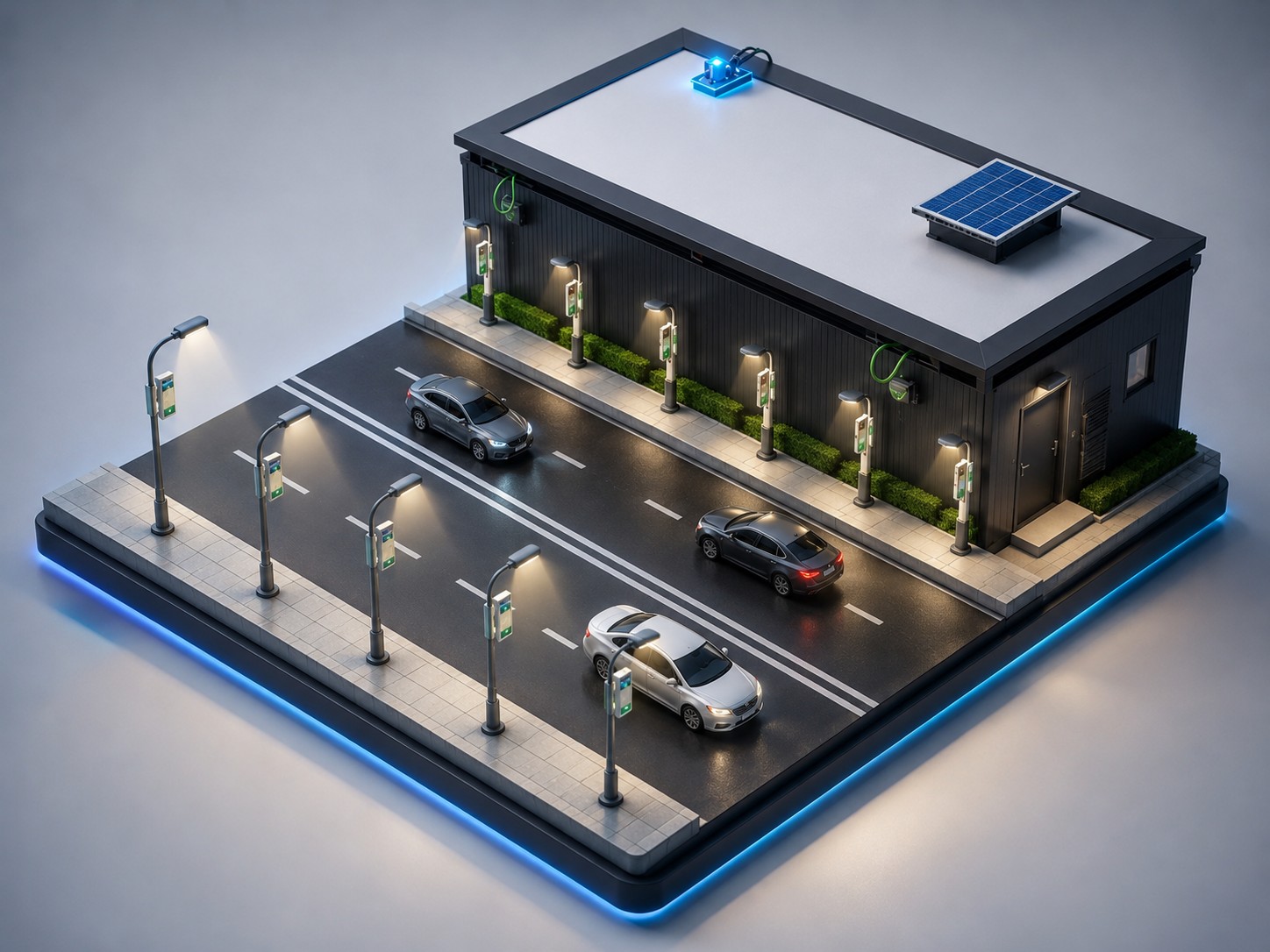
A prototype road section with piezoelectric plates, energy path, storage box concept, and lighting output.
Role
Prototype design, sensor integration, model construction, wiring, demo video, competition presentation, and award documentation.
Development process
From energy concept to physical smart-city prototype.
Energy concept
Defined how road pressure and vibration could be demonstrated through piezoelectric harvesting.
Prototype build
Constructed the road model, lighting elements, storage/control area, and visual presentation layout.
Embedded control
Used ESP32-oriented workflow, sensors, indicators, and OLED display concept for monitoring.
Demo and awards
Presented the prototype as a practical smart-city innovation, earning IDPEx Gold Award recognition.
Technologies used
Embedded hardware and physical prototyping.
Piezo plates
Pressure and vibration energy harvesting demonstration.
ESP32
Embedded workflow for sensing, display, and prototype control.
OLED display
Visual output for system state and monitoring concept.
Model design
Road, building, lighting, wiring, and storage-box representation.
Gallery
Prototype and award materials.

Future improvements
Making the concept more measurable.
- Add voltage/current logging and dashboard visualization.
- Improve mechanical pressure consistency and energy transfer.
- Add battery management and controlled lighting output tests.
- Document efficiency limitations and real-world scalability.